APTSLogo
  APTS
APTS
 
About APTS
Public TV Issues
The APTS Grant Center
For Members
Assoc
Events
Local Station Stories
Find your local Public Television station
Related Organizations


APTS News Room
   
Larry Sidman Speech at NETA Conference
 

Good Morning. Thank you, Skip, for inviting me to join you for this important conference. For decades, NETA has been a pillar of the public television community, providing operational, financial and education policy expertise to numerous stations across the country. APTS is proud to be a partner with NETA as we enter a new decade full of challenges and opportunities for public broadcasting. I want to extend a special invitation to you and all of the participants in this conference to come to Washington, DC on February 7-9 to join APTS in lobbying Members of Congress, the FCC and the Administration.

According to Roman mythology, Janus was the god of gates, doorways, beginnings and endings. His most prominent remnant in modern culture is his namesake, the month of January, which begins the new year. He is most often depicted as having two heads, facing in opposite directions. The new year is also a time for pundits to make predictions. I’ll resist the temptation to connect pundits to the two-faced Janus, but I do want to look back at what we accomplished in 2009 and look ahead to what we need to do in 2010.

2009 was a turbulent year for public broadcasting and for the nation. The economic recession hit public broadcasting hard, forcing stations to make painful decisions about programming, staff and budgets. When we polled the stations, we heard that revenues from every non-federal source were expected to plunge, in some cases by as much as 30 percent from FY 2008 to FY 2010.

When President Obama released his budget for FY 2010, it provided little consolation, proposing elimination of three programs important to public television: PTFP, Ready to Teach and Rural Digital - a proposed cut of $35 million from the prior year’s funding. The very modest proposed increase in the advance appropriations for CPB might dull the pain, but it fell far short of a cure. In response, APTS, in collaboration with PBS, NPR and CPB, charted a bold course to secure meaningful increases in federal funding. The centerpiece of which was a request for emergency or fiscal stabilization funding for FY 2010.

Looking back on how I felt at that time, I am reminded of a story.

A Western journalist in Jerusalem had an apartment overlooking the Wailing Wall. Every day she saw an old Jewish man fervently praying.

One day the journalist introduced herself to the old man. “How long have you been coming to the wall?” she asked. “What are you praying for?”

“I’ve come here every day for 25 years. In the morning, I pray for world peace. I go home, have tea, and come back to pray for the eradication of illness and disease from the earth.”

The journalist was amazed. “How does it make you feel to come here every day for 25 years and pray for these things?

“Like I’m talking to a wall,” replied the man.

With a little prayer and a lot of remarkable work, especially from the public television station community, this time the wall answered.

For FY 2010, public broadcasting received an overall increase of $42.7 million or 8% over last year’s federal funding levels and more than 13% over the President’s budget. Advanced funding for CPB will increase by $15 million for FY 2012, and funding for Ready to Learn will increase by almost $3 million. Ready To Teach is fully funded at the prior year level of $10.7 million. We handily won up or down votes on the Senate floor, restoring funding at last year’s levels for PTFP and Rural Digital, the first tests of the political strength of public broadcasting on the floor of the Senate since 1992.

To the surprise of many inside and outside the system, we succeeded in securing a fiscal stabilization appropriation of $25 million. APTS planned and executed a focused campaign with local stations and the other national organizations to secure this extraordinary, immediate addition to federal funding without sacrificing the two-year advance funding for CPB. These meaningful and urgently needed funds will go directly to local television and radio stations this month. Indeed, by the time you get home to your station after this conference is over, you may already have received a check for this funding. As Tip O’Neill was fond of observing, all politics is local. The indispensable role that local public television stations played in securing fiscal stabilization funds is a testament to the wisdom of his observation. Congratulations!

In addition to funding, APTS worked hard on satellite carriage issues in 2009. APTS sought to leverage the required reauthorization of the Satellite Home Viewer Act to at last obtain a carriage agreement with DISH Network, the last major multichannel video programming distributor with which we do not have a private carriage arrangement. Following two hearings in the House Communications Subcommittee, which were not the happiest of days for the DISH Network witnesses, we initiated an intensive phase of negotiations with DISH to address accelerated carriage of local public television stations’ High Definition signals, multicast carriage through video on demand and expanded carriage of state public television stations throughout their states. APTS repeatedly solicited the input of our Board and local stations, some would say to the point of SHVERA fatigue, through numerous calls and memos. I’d like to extend a special thank you to NETA for helping to contact stations and provide feedback during these negotiations.

Simultaneously, APTS pursued a legislative strategy, supporting an amendment sponsored by Representative Anna Eshoo (D-CA), requiring that DISH Network provide accelerated HD carriage of local public television stations – 50% by December 31, 2010 and 100% by December 31, 2011, much faster than the FCC’s required schedule. Both versions of the House and Senate satellite carriage legislation now incorporate the Eshoo Amendment. Although enactment of SHVERA reauthorization was pushed into early 2010, for reasons largely unrelated to the substance of the bill, there is every reason to believe that the Eshoo amendment will survive the rest of the legislative process.

This two track strategy puts public television in a strong position. We essentially have the option of ratifying a meaningful private carriage agreement negotiated by APTS with DISH or foregoing the agreement in favor of the Eshoo Amendment. Now that the legislative landscape is clear, APTS will be reaching out to stations once again to give them an opportunity to either support the private agreement or opt for the legislative solution. Either way, satellite carriage of public television stations across the country will be vastly improved in 2010.

The last example from 2009 that I’d like to highlight is the first ever Public Television Health Education Showcase on Capitol Hill which APTS hosted in September. 18 stations were present to emphasize the essential role that public television plays in promoting wellness and preventing disease. Each station’s exhibit included video programming, exciting on-line, interactive content and on-the-ground partnerships with health care facilities in local communities all across the nation. Public broadcasting’s role in health care is particularly important as we serve the most vulnerable members of our society—communities of color, Spanish speaking communities and the poor. This showcase was planned to coincide with the major health reform legislation moving through Congress. APTS worked with the key committees on provisions in the House and Senate bills that provide roughly $7 billion in competitive grants over 5-6 years, respectively, for disease prevention and wellness education services. Public television stations will be eligible for and well positioned to receive these competitive grants if health reform legislation is signed into law. During Capitol Hill Day, we will be asking stations to advocate in favor of these provisions which give public television the opportunity to do well and good at the same time.

Speaking of additional revenue opportunities, APTS is proud to have launched the new APTS Grant Center, though a generous grant from CPB. The Grant Center assists public television stations in researching and identifying federal grant and foundation funding opportunities. Yesterday you heard from Ellen Holloway, APTS Grant Coordinator. I encourage you to establish regular communication with her. The darkening budget deficit picture makes it imperative that stations aggressively explore sources of federal and non-federal funding beyond the programs funded by the CPB appropriation and other traditional programs funded through the normal, annual appropriations process. New grant programs, especially in education, job training and health care, offer great promise in supplementing federal revenues and fulfilling your station’s public interest mission.

While we celebrate the victories of 2009, now is the time for us to look ahead to the next decade, establish priorities and plan the future of public broadcasting.

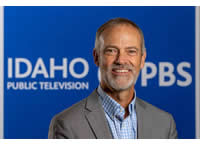
We cannot neglect the need for continued strengthening of the fiscal foundations of public broadcasting. We are not yet out of the woods. No better illustration of the financial challenges that confront public television exists than projected decreases in state revenues. In late 2009, APTS, in conjunction with NETA, conducted a survey of stations to get a sense of projected losses in state funding. We found that compared to FY 2009, FY 2010 state support for local public television and radio stations fell by approximately $23 million. That number is growing. Just this week, Idaho Public Television joined 20 other states which have seen declines in their annual appropriations, with the governor proposing to phase out all public television funding by 2014. APTS is focused on this looming crisis in state funding. Although APTS is not structured or funded at this time to provide state lobbying services, we intend to work closely with the stations to develop solutions, including exploring offsetting federal funding.

Fiscal stabilization and strengthening is inextricably intertwined with the overarching issue confronting public broadcasting today: What is our future? How do we redefine ourselves with reference to revolutionary technological change and the erosion of the business models for commercial print and broadcast media? How do we craft a vision and a message relevant to a more diverse America, a more computer-centric America and an America actually craving a source of trusted information that we in public broadcasting are uniquely equipped by talent, history and commitment to promote?

There is a growing body of literature coming out of the foundation community and academia that opines on the future of public media and voices criticism of public broadcasting, albeit generally couched in polite and constructive terms. Many of you probably have read at least excerpts from the Knight Commission report on the Information Needs of Communities or the Columbia University School of Journalism study. I also urge you to read the comments in the FCC’s Broadband Plan proceedings filed by Ellen Goodman, a Professor of Law at Rutgers University, who represented PBS when she was in private practice years ago. While relying repeatedly on the extraordinary work of public television and radio, she proposes far reaching reforms to make public media far less broadcast-centric.

The time has come for the public broadcasting community to engage in and lead this debate. Just after Christmas, the AGC sent a letter to the Presidents of the four national organizations asking that we take a leadership role in formulating a consensus vision for public media in the 21st century and asking that stations be included in that process. Our answer is clear: “Yes we will.” That effort already has commenced. Of course, the stations will and must play a central role because you are the featured actors. The local stations possess the talent, the creativity and the local community connections to reinvigorate localism, drive broadband adoption through enhanced and exciting online content and connect all our citizens, especially communities of color, the poor and historically underserved, to a network of local institutions that can provide education to cope with daily challenges, large and small. The stations know better than anybody else our capabilities, our limitations and how fiscal constraints are inhibiting fulfillment of our greatest potential.

The art of effective advocacy is storytelling and inspiration. Tell us your stories with the same skill as you use to produce the highest quality programming and online content. Tell us your dreams so that we may inspire the Administration and the Congress. For example, the crisis in American journalism today presents a huge opportunity for public broadcasting to fill the growing vacuum. We can draw upon our collective experiences with in-depth, contextual news and public affairs reporting and the American public’s trust in the information we disseminate. Help us to develop an integrated national-local plan for such an expanded mission.

This debate is far more than an academic exercise. As we gather here today, the FCC’s National Broadband Plan Task Force is working furiously to finalize its Report to the Congress required to be delivered by February 17, 2010. The FCC Chairman recently sought a one-month extension of that deadline. One major aspect of the plan will focus on the need for a very significant amount of digital spectrum to enable wireless broadband – so called 4G – applications. All uses of spectrum, including that currently allocated to commercial and noncommercial broadcasters, are on the table.

Each of the national organizations has had one or more meetings with the key FCC staff working on the Broadband Plan. APTS, PBS and CPB submitted two sets of joint comments to the FCC, one in October and one at the end of the year, urging the FCC to pursue a national broadband strategy that recognizes the enduring and complementary role of free, over-the-air digital public television in serving the educational, informational and cultural needs of the public. Public television values the growth of broadband and views our high quality content as a potentially potent driver of broadband adoption. Our stations are laboratories for ways in which broadcasting can turbo charge broadband and vice versa. Any National Broadband Plan should not compromise the bedrock principles of universal service, localism, and diversity that are the foundation of the public broadcasting system.

Some stations might be attracted to potential revenue generated from the reallocation of spectrum, viewing auction proceeds as the possible corpus for a long-sought public broadcasting trust fund. Others of you might think there is no way you are giving up your spectrum. This is a system-wide conversation that needs to occur. APTS, together with our sister national organizations, will continue to listen attentively to the public television stations and advocate wisely on your behalf.

As public broadcasters develop their vision, especially within the context of the spectrum reallocation debate, I would urge intensive and rapid intellectual action coupled with extraordinary political caution. The attention that will be given to the National Broadband Plan, when it is released by the FCC, will create a sense of imminence. Let me suggest that we are only in the pre-season, not the playoffs. The risk of serious political missteps is huge because any joining of spectrum reallocation to targeted funding for public media will be decided by the Congress, not the FCC. Returning to our January friend, Janus, there are flashing red lights at the doors to the Appropriations and Commerce Committees which public broadcasting cannot ignore.

For public broadcasting to succeed in the future, it must draw upon its core strengths, its commitment to education and its distinctive local programming. But we must do more. As the Public Broadcasting Act of 1967 states, “it is in the public interest to encourage the development of programming that involves creative risks.” We need to use not only our over-the-air capabilities, but also our on-line and on the ground partnerships to do what we do best - inform, educate and inspire the American people to sustain our civil society. It is time for public broadcasting to take a risk, to be innovative and to experiment. As Albert Einstein once said, "Imagination is everything. It is the preview of life's coming attractions.”


Copyright © 2010, Association of Public Television Stations
2100 Crystal Drive, Suite 700 Arlington, VA 22202
Telephone: 202-654-4200   Fax: 202-654-4236
Privacy Statement