NEWS
Read about newsworthy items on issues affecting public broadcasting, including press releases, news articles, videos, speeches, local stations stories and more.
Latest News
-
APTS Commends U.S. House Approval of Funding for Public Broadcasting
03/22/24
The U.S. House of Representatives today approved $535 million in advance funding for the Corporation for Public Broadcasting (CPB) in fiscal year 2026.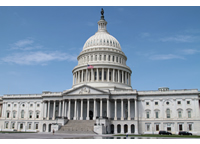
-
Sinclair and APTS Announce Free Virtual Channel Hosting for Public Television Stations Not Yet Transmitting in ATSC 3.0
03/13/24
This partnership will offer more NEXTGEN service to more public television viewers.
-
APTS Statement on the President’s FY 2025 Budget
03/11/24
APTS appreciates the President’s proposal to increase the federal investment in CPB and for his endorsement of public media’s mission as partners in public service. -
Senator Shelley Moore Capito Receives 2024 Champion of Public Broadcasting Award from America’s Public Television Stations
02/28/24
Senator Capito has been a long-time friend of public broadcasting and has been a supporter of our work for over two decades.
-
Senator Tammy Baldwin Receives 2024 Champion of Public Broadcasting Award from America’s Public Television Stations
02/28/24
Senator Baldwin has been a stalwart and effective champion of public broadcasting in countless ways for decades.
-
Congressman Earl Blumenauer Receives Lifetime Achievement Award from America’s Public Television Stations
02/28/24
No organization has ever had a more passionate, committed and effective champion than public broadcasters have in Congressman Earl Blumenauer.
-
APTS Presents 2024 National Advocacy Award to Kurt Mische, President and CEO of PBS Reno
02/28/24
Kurt Mische has been unusually influential in his advocacy for public television in Nevada and California.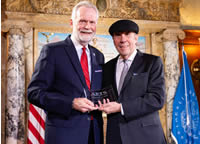
-
APTS Presents Champion of Public Broadcasting Award to Lonna Thompson
02/27/24
Lonna’s extraordinary contributions have been an invaluable asset to APTS and all public television stations across our country.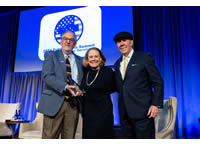
-
APTS Presents 2024 Excellence in Innovation Award to Edward J. Ulman, President and CEO of Alaska Public Media
02/27/24
Under Ed’s determined leadership, Alaska Public Media is serving people who are almost impossible to reach.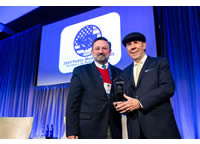
-
Patrick Butler’s Presidential Address at the 2024 Public Media Summit
02/26/24
On Monday, February 26, 2024, Butler, in his annual presidential address, called on public broadcasters to lead a restoration of civility in American life.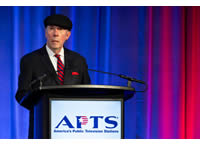
-
Butler Urges Public TV Stations to Promote Civility in Public Discourse
02/26/24
APTS President and CEO Patrick Butler today called on public broadcasters to lead a restoration of civility in American life.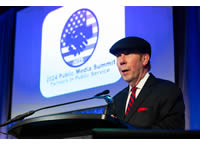
-
Patrick Butler Receives Lifetime Achievement Award from America’s Public Television Stations
02/26/24
Pat has been the dedicated and visionary leader and voice of our local public television stations in our nation’s capital for over a decade of growth.
-
America’s Public Television Stations Present 2024 David J. Brugger Lay Leadership Award to Dorothy Pacella, Former Executive Director of Friends of Thirteen, Inc. at The WNET Group
02/26/24
No one has played a more effective role, over a longer period of time, marshalling grassroots support for the work of public television than Dorothy Pacella.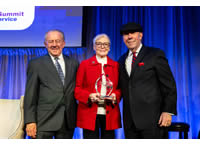
-
APTS Presents 2024 Pillar of Public Service Award to Molly Phillips, Former Executive Director and General Manager of Iowa PBS
02/26/24
Over the course of a 34-year career at Iowa PBS, Molly Phillips has pursued public television’s public service missions in extraordinary ways.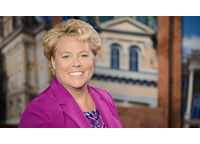
-
America’s Public Television Stations Elect Board Officers and Trustees
02/07/24
Read about the elections of the APTS board leaders and members.